Forex Trading in Enugu: A Careful Start for Students and Young Professionals (2026 Guide)
Forex trading in Enugu starts with demo practice, small and controlled risk, a written track record and caution around account manager promises.

Forex trading in Enugu may appeal to students and young professionals looking for a skill they can study alongside school or work. The safest starting point is not finding money to deposit; it is learning how the market works and proving that you can follow a process on a demo account. Small capital does not make a risky strategy safe, and a good track record takes time to build. This guide lays out a measured path and explains why handing an account to a stranger is a dangerous shortcut.
Forex trading in Enugu: begin on demo
A demo account lets you practise with simulated funds. It can teach you how orders, stop losses and platform controls work without putting savings at risk. Demo results are not proof that live trading will be profitable: real money can change emotions, and simulated execution may differ from live conditions. Still, it is a sensible place to learn the mechanics and test whether you can follow written rules.
Keep the practice focused. Choose one or two instruments, use a clear method, and record each decision. Note the date, market context, entry reason, stop location, planned risk and outcome. Also record whether you followed your rules. A result alone does not show whether the decision was sound; a winning trade can break the plan, and a planned loss can be executed correctly.
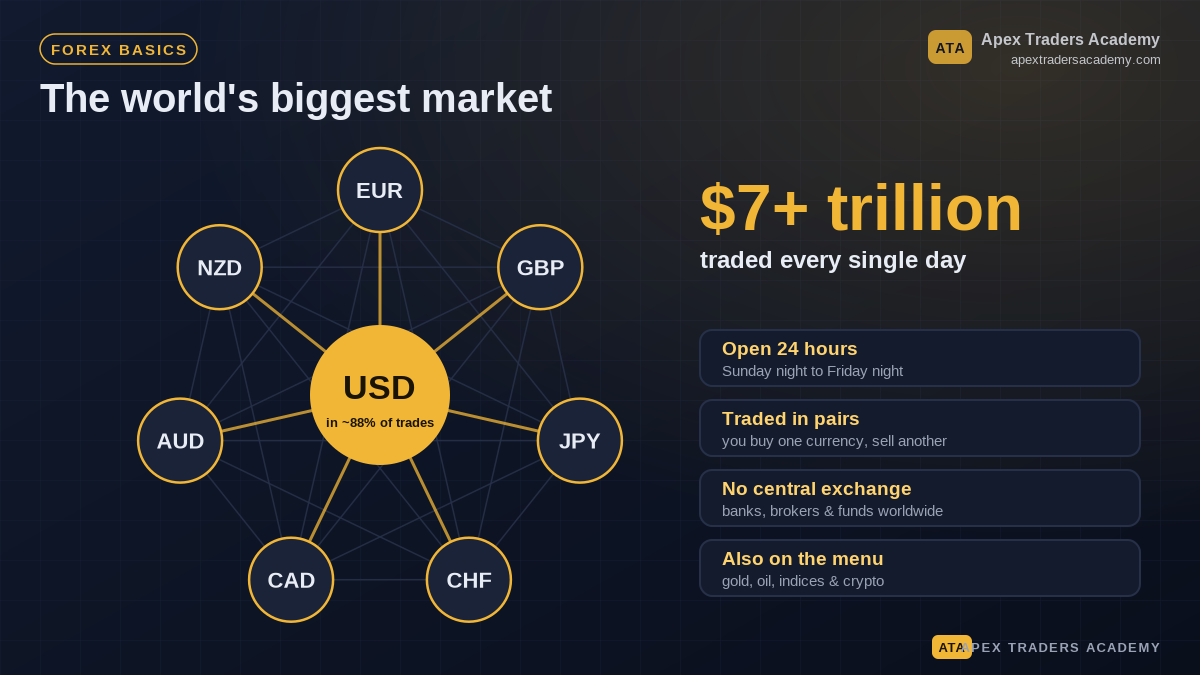
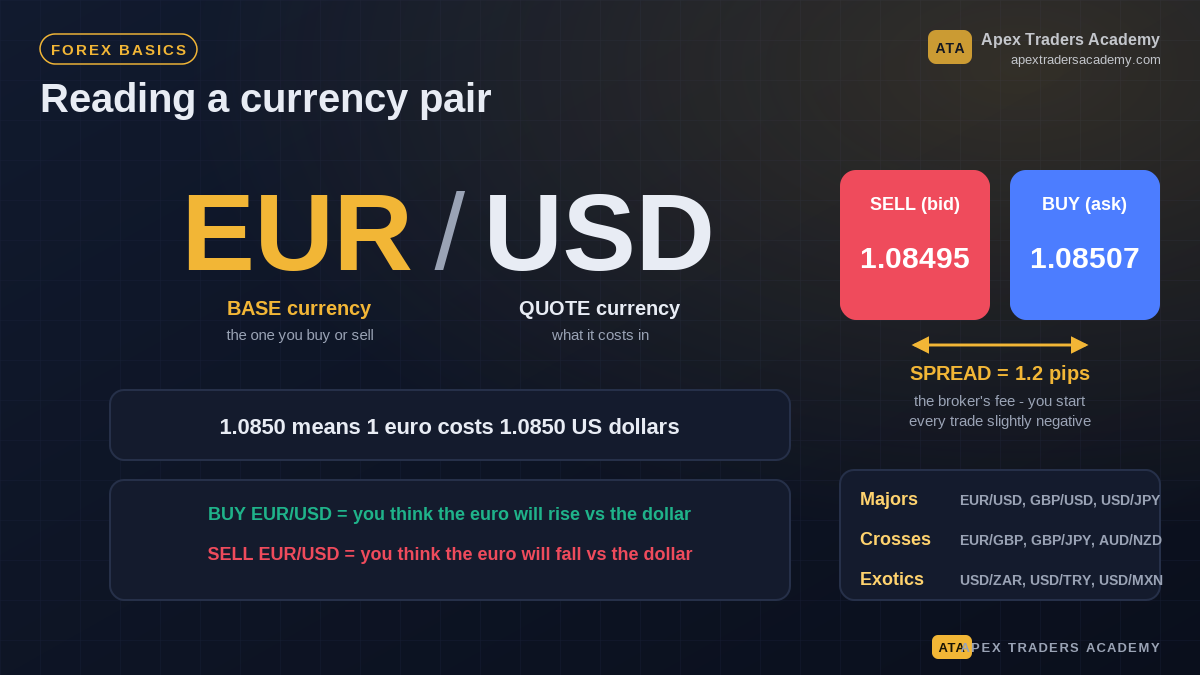
For foundations, read what forex is, pips, lots and leverage explained, and how to read candlestick charts. Learn market structure before adding more indicators or strategies.
What 1% risk means in practice
Risk is the amount you could lose if the stop is reached, not the amount you hope to make. The one-percent risk rule is a common educational guideline: a trader chooses a maximum loss around one percent of account equity for a single trade. It is not a guarantee or a universal rule, and some people may need a lower limit or no live trading at all.
Here is an arithmetic example. If a demo balance is $500 and the practice limit is 1%, the planned loss is $5. The position size must be small enough that a stop-out would be close to that planned amount, after considering the instrument's pip or point value and possible costs. If the minimum trade size would put more than $5 at risk, the account size or instrument may not fit the plan. Do not move the stop farther away after entering just to avoid accepting a loss.
Read the one-percent risk rule and how to calculate lot size. Those skills matter more than trying to turn a tiny balance into a large one quickly. Leverage can make a position appear affordable while exposing the account to a large loss.
Build evidence before thinking about prop firms
Prop firms generally assess traders under specific rules, which can include loss limits, evaluation fees and restrictions. Terms differ, and passing an evaluation does not guarantee a stable income. Before paying for any challenge, read the rules yourself and ask whether your own records show consistent rule-following across different market conditions.
A useful practice record contains enough examples to reveal recurring mistakes. Look for whether you exceed your risk limit, take trades outside your plan, or perform differently after a loss. Avoid choosing a fixed number of trades as a magic proof; the quality and range of your sample matters, and no short record can remove uncertainty. A journal helps you distinguish a repeatable process from a lucky run.
Do not borrow tuition, rent money or school fees to pay an evaluation or fund a trading account. If you cannot afford to lose the fee, wait. The decision to trade should not put essential expenses at risk.
Avoid account manager and student-targeted scams
Be cautious when someone says they can trade your account, guarantee returns, or make your money grow while you focus on school. A screenshot is easy to select and does not prove a complete history. Requests for your broker password, remote access or a transfer to a personal wallet expose you to loss and account misuse.
Warning signs include pressure to act today, fixed weekly returns, a referral bonus tied to deposits, refusal to explain losses, or a demand to send funds to an individual. A legitimate educator should teach you to make and review decisions rather than require control of your account. Do not share login details, one-time codes or remote desktop access. If you have already sent money, preserve messages and payment records and seek help through the appropriate official channels.
A three-stage learning path
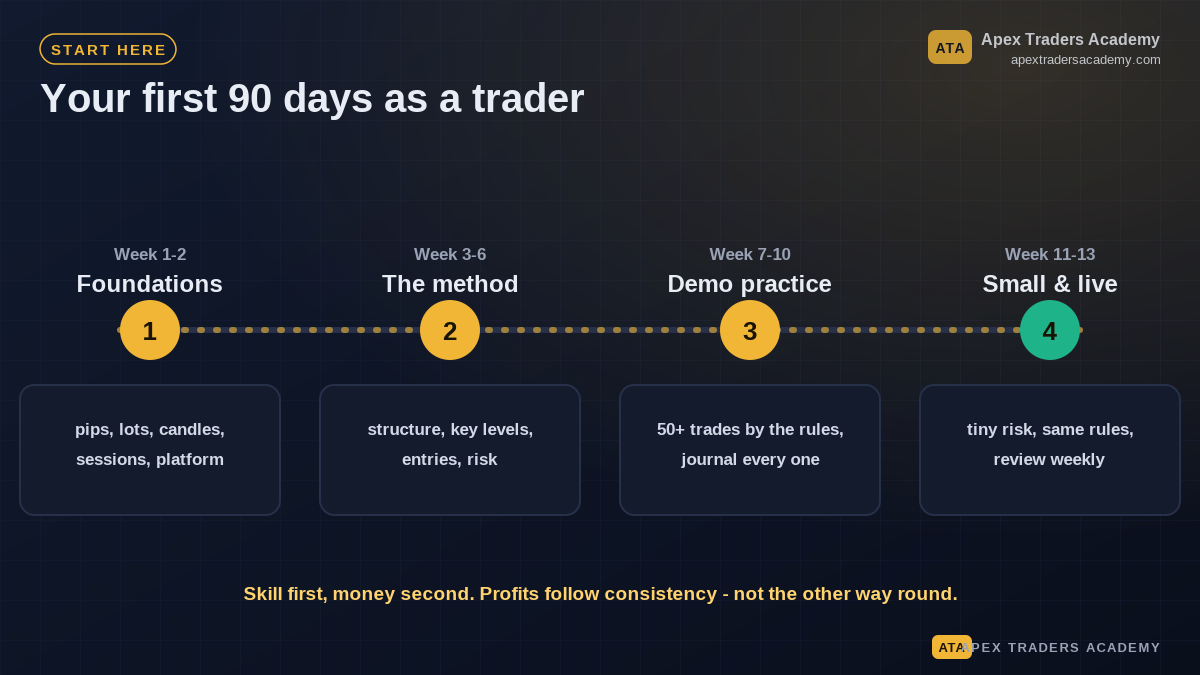
Stage one: learn the language. Understand pairs, pips, lot size, leverage, sessions and order types. Practise identifying candles and basic levels without trying to predict every move.
Stage two: practise one method. Use the same entry conditions on demo. Start with Weekly and Daily context, then refine on 4H if that fits the method. Write the invalidation point before entering a practice trade. Review losses without changing the rules after every result.
Stage three: review your evidence. Keep a journal and look for repeated execution errors. If you are not following rules on demo, adding real money is unlikely to fix the problem. If you do consider live trading later, use only money that is not needed for essentials and keep the size small enough to tolerate a full planned loss.
Online learning from Enugu
Apex Traders Academy's physical trading floor is at Lady Giselle Street, River Park, Lugbe, Abuja. People in Enugu can take the full course online through live video sessions, recorded lessons and community access. The package includes Apex Charts, a free trading journal and Telegram alerts. In-person sessions are available to learners who choose to travel to Abuja; Apex has no Enugu branch or classroom. Our Abuja learning guide and Nigeria learning guide explain the wider course options.
The course costs $200 for three months or $300 for lifetime access. Review the course details and compare the curriculum with your needs. The course should support learning; it cannot promise an income or remove market risk.
Further reading: first 90 days trading roadmap, how to build a trading plan, trading journal habit, how much to start forex trading in Nigeria, and choose a broker and spot scams.
Frequently asked questions
Can a student learn forex trading with little money?
You can learn the basics and practise on demo without funding a live account. If you later trade live, first calculate the possible loss and protect money needed for school, food, housing and other obligations.
Should I start with EURUSD?
EURUSD is a widely followed major pair, but no instrument is automatically easy or safe. Learn how the pair moves, check its costs and practise a method before deciding whether it suits you.
Is 1% risk safe?
It is a risk-management guideline, not a promise of safety. A losing streak can still reduce an account, and each person must decide whether any risk is affordable. Demo practice avoids risking cash while learning.
Should I let someone manage my account?
Be very cautious. Giving another person your credentials or control of funds can lead to theft or unauthorised trades. Avoid guaranteed-return claims and learn to review your own decisions.
When should I try a prop firm challenge?
Only after you understand the firm's full rules and have a meaningful record of following your own plan. A challenge fee is at risk, and passing is never assured.
Keep the first goal modest
Make your first goal a set of well-recorded practice decisions, not a target income. Use Apex Charts to study EURUSD and review your plans, and explore structured online study at /courses when you are ready.
Education only - not financial advice. Trading on margin is risky; never risk money you can't afford to lose.
Want to see this on live charts?
Inside the course we apply every lesson to real Weekly, Daily and 4H charts - with mentorship until it clicks.
Education only, not financial advice. Trading on margin carries a high level of risk. Always use a stop loss and risk only what you can afford to lose.
Next lessonForex Trading in Kano: Swap-Free Accounts, Gold and Disciplined Practice (2026 Guide) →
Forex trading in Kano can include learning about swap-free accounts, overnight charges and disciplined gold trading without treating markets as gambling.