What Is Smart Money Concept in Forex? A Clear Beginner's Guide
What is smart money concept in forex? It is a price-action framework using terms such as order blocks, liquidity and structure shifts, which need clear rules and risk controls.

Smart money concept, often shortened to SMC, is a family of chart-reading ideas that interprets price through concepts such as liquidity, order blocks, breaks of structure and premium or discount. These terms can help traders describe a chart, but they do not reveal exactly what large institutions are doing or guarantee a profitable trade.
If you are learning SMC, define each term in a way you can apply consistently. Then compare it with observable, close-based rules: where price closed, which swing was broken, how a level reacted, and where your trade idea would be invalidated. A clean description is more useful than a dramatic label.
What is smart money concept in forex?
SMC is not one universally standardised strategy. Different educators use different definitions, drawing rules and entry triggers. Some approaches borrow language from institutional order flow, but a retail chart alone cannot confirm the identity or intentions of participants behind a candle.
The useful question is not whether a chart contains secret institutional footprints. Ask what the price actually did and whether your rules define a repeatable decision. If two traders mark different order blocks on the same chart, they may be using different definitions rather than seeing hidden certainty.
What traders mean by liquidity
In ordinary market terms, liquidity relates to the ability to transact without a large price impact. In SMC conversation, “liquidity” is often used for areas around obvious highs, lows or equal swing points where orders may cluster. A retail trader cannot see every resting order simply by looking at a standard candle chart.
When price trades beyond a prior high and closes back below it, you can describe an observable sweep or rejection. Some traders call this a liquidity grab or stop hunt. The chart shows the price excursion and close; it does not prove that someone deliberately hunted a particular group of stops.
For illustration, imagine price rises above a prior swing high near 1.0900, reaches 1.0912, and closes back below 1.0900. Those are sample values, not current quotes. You can record that price moved beyond the swing and failed to hold above it. Whether that matters depends on timeframe, location and what happens next. See liquidity, inducement and stop hunts.
Order blocks: a term with varied definitions
An order block is often described as a candle or price area before a strong move that later gets revisited. Definitions differ: some mark the last opposing candle, some use candle bodies or wicks, and some require a structure break. Because the term is not applied identically, state your own rule before testing it.
Calling a candle an order block does not establish that a bank placed a known order there. It is a chart label for an area traders believe may matter. To keep the idea testable, write down the candle-selection rule, timeframe, what price must do on return, and what close would invalidate the area.
For example, a learner might mark the final bearish candle before a strong bullish leg that closes above a prior swing high. On a later return, the learner observes whether price rejects the area or closes through it. That is a study rule, not proof of institutional activity or a guaranteed setup.
BOS and CHoCH: structure labels
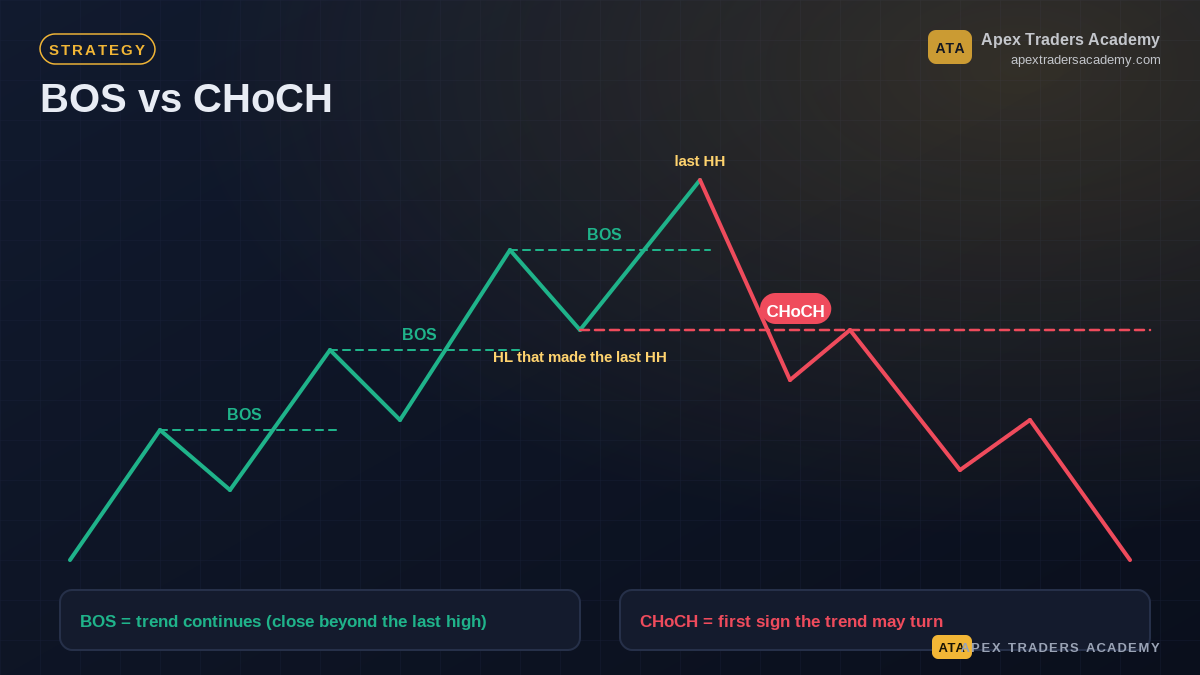
BOS usually means break of structure, often a move through a prior swing in the direction of an existing trend. CHoCH usually means change of character, often a break that traders interpret as a possible shift in direction. These abbreviations have competing definitions, especially around whether a wick or candle close counts.
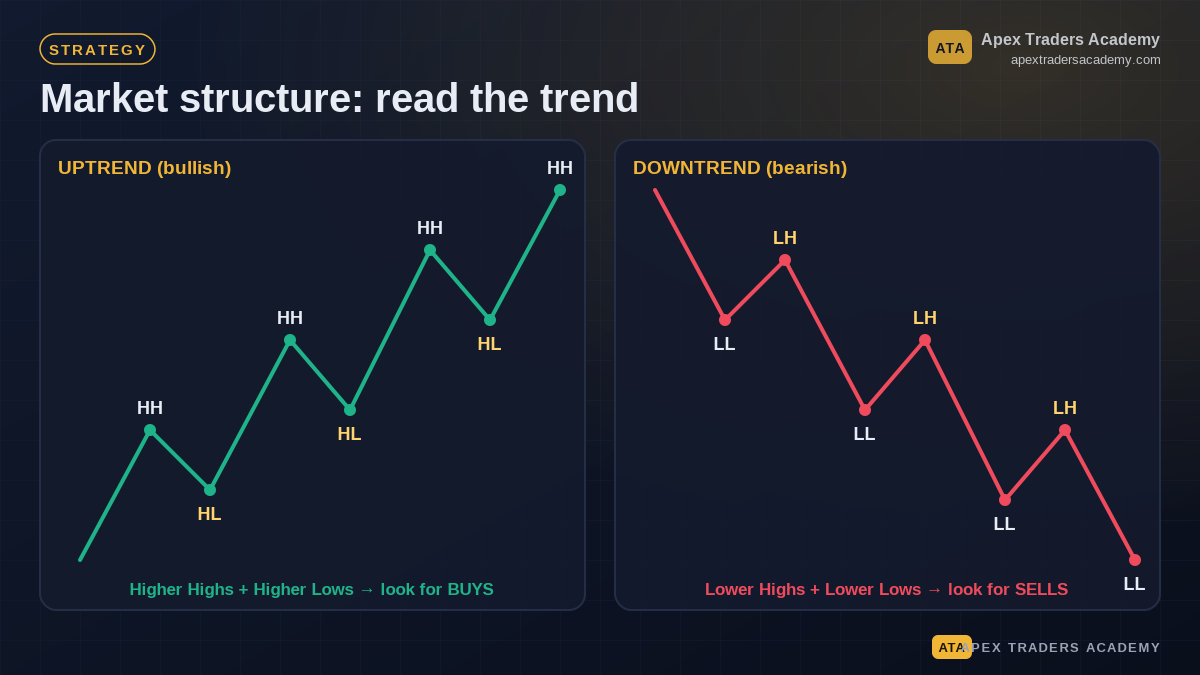
For a close-based method, decide which swing matters and require a candle close beyond it. A wick alone may show an excursion without acceptance beyond the level. This helps make chart reviews more consistent, even though no close rule guarantees continuation. Read BOS vs CHoCH explained and market structure: higher highs and higher lows.
Premium and discount
Some SMC methods divide a selected price range into upper and lower halves. The upper half is called premium and the lower half discount, often using a midpoint. The result depends on which swing high and low you choose; selecting different boundaries changes the midpoint.
This framework can help traders avoid buying near the top of a chosen range or selling near its bottom without a reason. But “discount” does not mean cheap in a fundamental sense, and it does not promise price will rise. It is a relative location inside a range. See premium and discount with Fibonacci.
Relate SMC ideas to a simpler close-based routine
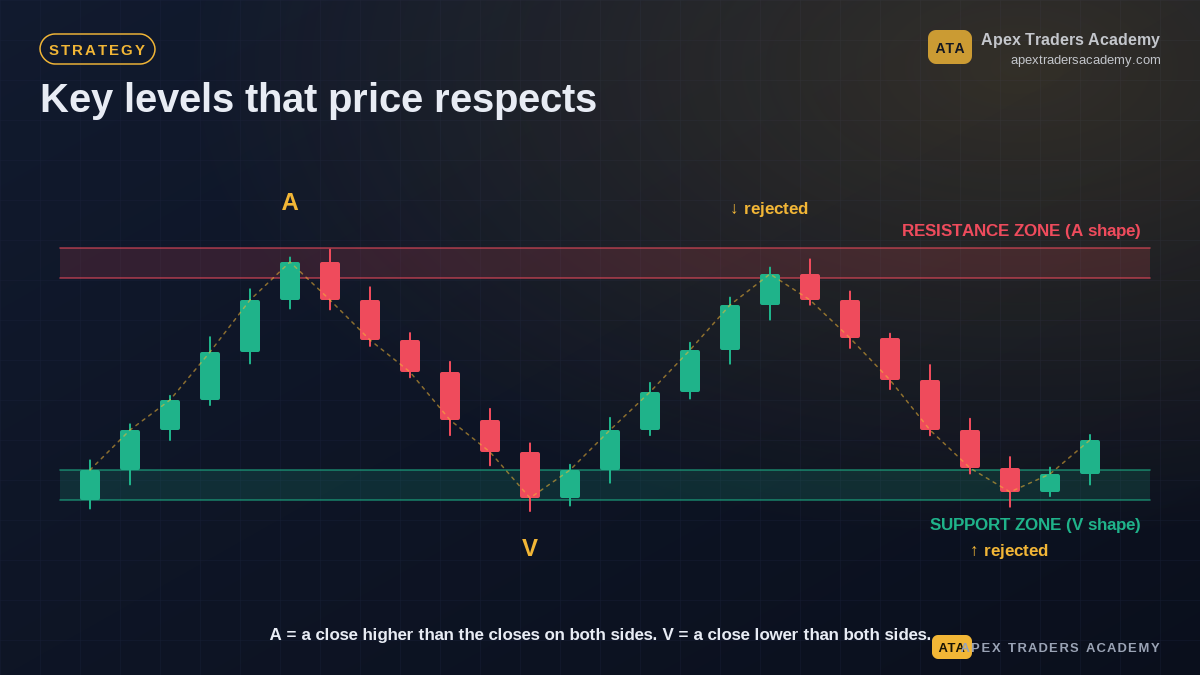
You can use SMC vocabulary while keeping decisions grounded in visible price action. Begin Weekly -> Daily -> 4H. On Weekly, describe broad structure. On Daily, mark a small number of A/V key levels. On 4H, wait for price to show a defined rejection or close-based structure change before considering a setup.
An engulfed + engulfing candle sequence may be part of the evidence if your rules define it. A liquidity candle that sweeps a prior high or low and closes back inside can be recorded as a possible rejection. Neither pattern alone is an entry instruction. The key is to state what you will observe, where the hypothesis fails, and how much you stand to lose.
For an illustrative long scenario, imagine Weekly structure is rising, Daily price pulls into a prior reaction zone, and 4H wicks below a local low before closing back above the zone. A following candle closes above a minor swing. A trader could describe this as a sweep and close-based structure shift. The trader still needs an invalidation point, position size, and a reason to skip if risk is too large.
Build a risk plan around the setup
SMC language can make a chart feel precise while the trade itself remains uncertain. Use a fixed risk process. For example, on an illustrative ₦250,000 account, a 1% planned risk cap would equal ₦2,500. The position must be sized so the planned stop loss fits that cash amount, after accounting for pip value, contract details and costs. This is a worked calculation, not a recommended amount.
Do not place stops at a level simply because a concept says liquidity sits there. Choose an invalidation point based on the specific trade idea and understand that execution can differ in fast markets. See risk management in forex, the one percent risk rule and how to calculate lot size.
Common SMC mistakes
One mistake is treating every wick as a stop hunt. Another is finding an order block after price has already moved and then claiming the move was predictable. Traders also change their swing selection until a desired BOS or CHoCH appears, or use several overlapping concepts to justify a trade that has no clear invalidation.
Avoid overloading a chart with boxes and labels. Mark only the levels you can explain. Keep the same definitions across practice examples and include failures. If a setup cannot be described in plain language, it may not yet be a usable rule.
How to practise SMC ideas responsibly
On Apex Charts, select a historical section and mark the Weekly and Daily context before moving to 4H. Define your swing points and note whether you require a close or accept a wick. Mark an order block only according to your written rule. Record both cases where price reacted and where it closed through the area.
Use the trading journal to capture screenshots and whether you followed your risk rule. Review a meaningful batch of examples before deciding whether a concept helps your process. A good learning test is whether two weeks later you can apply the same definition without changing it to fit the result.
Frequently asked questions
What is smart money concept in forex?
It is a collection of price-action frameworks using ideas such as liquidity, order blocks, BOS, CHoCH and premium or discount. Definitions vary and the terms do not guarantee a trade outcome.
Are order blocks actual institutional orders?
A chart label alone cannot verify who placed orders or why. An order block is an interpretation of a price area under a chosen rule, not direct evidence of a named institution’s activity.
What is the difference between BOS and CHoCH?
BOS is commonly used for a structure break in the prevailing direction; CHoCH is commonly used for a possible change in direction. The exact rules vary, so define which swing and close condition you use.
Does a liquidity sweep mean price will reverse?
No. A move beyond a prior high or low followed by a close back inside is observable price behaviour. It may reverse, continue later or remain choppy.
Is SMC better than basic price action?
There is no universal answer. A method is only useful if you can define its rules, manage risk and review results honestly. Simpler close-based rules may be easier to apply consistently.
Education only - not financial advice. Trading on margin is risky; never risk money you can't afford to lose.
Want to see this on live charts?
Inside the course we apply every lesson to real Weekly, Daily and 4H charts - with mentorship until it clicks.
Education only, not financial advice. Trading on margin carries a high level of risk. Always use a stop loss and risk only what you can afford to lose.
Next lessonWhat Is NAS100? A Beginner's Guide to NAS100 and US30 →
What is NAS100? Learn what NAS100 and US30 represent, how index products differ by provider, Nigeria trading hours in general, and why sizing and news risk matter.