Liquidity & Inducement: Why Price Takes Your Stop Loss First
Ever been stopped out by a few pips - right before price flew to your target? It wasn't bad luck. Here's what really happened.
It's the most painful experience in trading. You spot the setup, you enter, your stop loss sits neatly below the obvious low... price dips, takes your stop by three pips, then rockets exactly where you predicted.
It feels personal. It isn't. It's liquidity.
What is liquidity?
Big players - banks and funds - trade enormous positions. To buy a huge amount, they need a lot of people selling at the same time. Where do you find lots of sell orders sitting together?
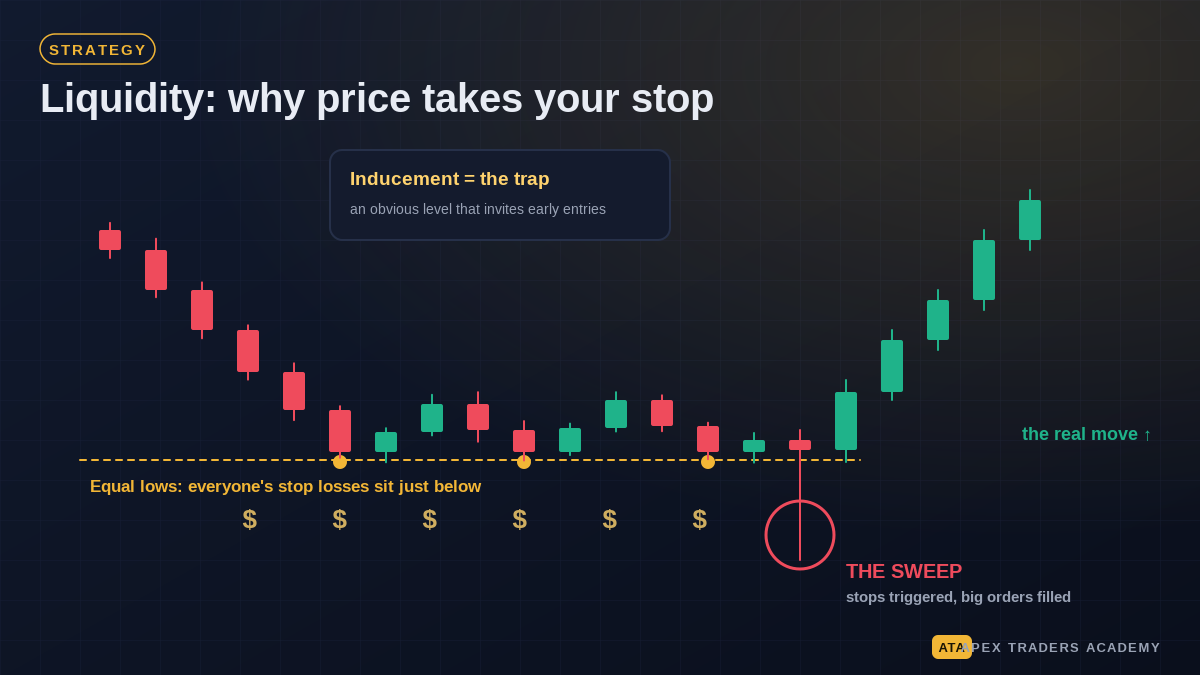
- Below obvious lows - every buyer's stop loss is a sell order
- Below equal lows / double bottoms - the most obvious of all
- Above obvious highs - every seller's stop loss is a buy order
- At round numbers like 1.1000 or 2,700.00
These clusters of orders are liquidity pools. Price is often drawn to them before the real move begins.
The sweep
A liquidity sweep (or stop hunt) is when price spikes through one of those pools and quickly closes back inside. Stops are triggered, big orders are filled, and price reverses. On the chart it usually leaves a long wick.
Inducement: the trap before the trap
Inducement is an obvious, tempting level that invites traders to enter early. Retail traders buy at the first small low inside a zone; their stops sit just below it. Price then sweeps that low - taking their stops - before moving in the real direction.
How to use this in your trading
- Don't place your stop exactly at the obvious low. Put it beyond the zone or beyond the sweep wick.
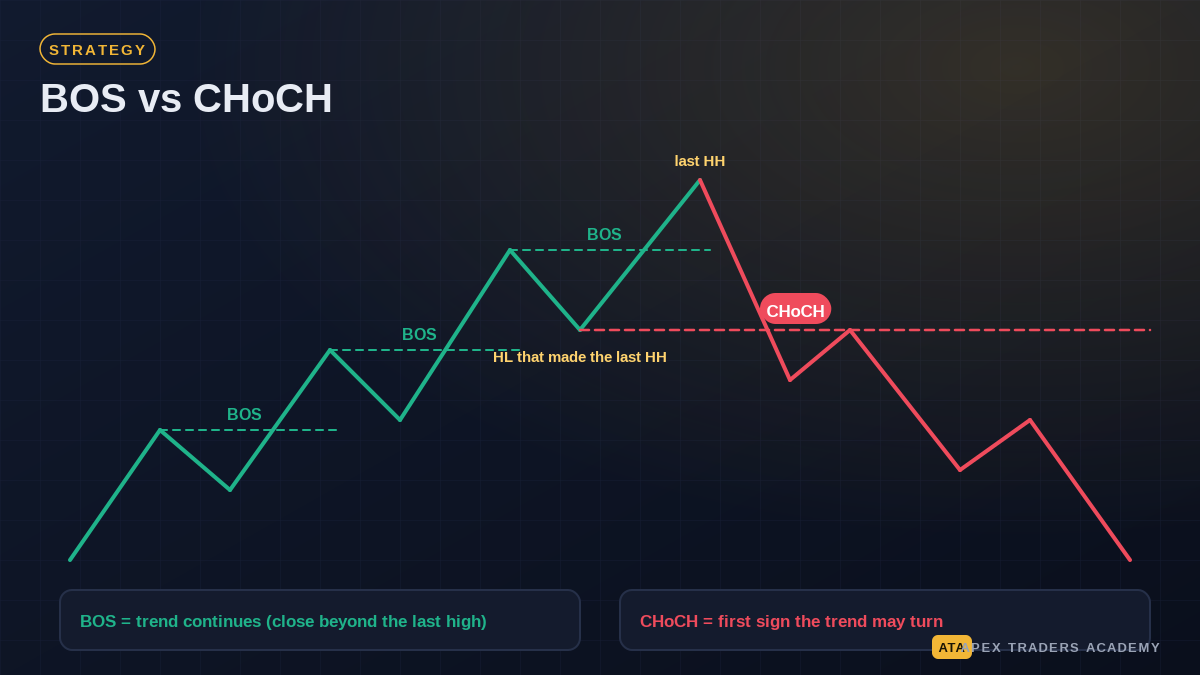
- Wait for the sweep, then a confirmation - a CHoCH on the lower timeframe or an engulfing candle closing back inside.
- Don't chase breakouts of equal highs or lows. Many are sweeps that reverse.
- Use the sweep as a target - if equal highs sit above price, they're a natural take-profit.
Liquidity in the Apex method
In our weekly setup, after the rejection and the daily engulfed/engulfing pair, we often see a later pullback candle that grabs the liquidity around the engulfing pattern. Many students use that pullback as a refined entry with a tighter stop.
Next lesson: Premium and discount: buy cheap, sell expensive
Want to see this on live charts?
Inside the course we apply every lesson to real Weekly, Daily and 4H charts - with mentorship until it clicks.
Education only, not financial advice. Trading on margin carries a high level of risk. Always use a stop loss and risk only what you can afford to lose.
Next lessonPremium & Discount: How to Buy Cheap and Sell Expensive →
Professional traders don't buy in the middle of a move. They wait for a discount. Here's how to measure it with one tool.