Risk Management in Forex: A Practical Guide for Beginners
Risk management in forex means deciding how much you can lose before entering, sizing the trade to fit, and recording whether you followed your plan.

Risk management in forex is the set of rules that limits the damage when a trade goes wrong. Before entry, decide your maximum loss, place a logical invalidation point, calculate a position size that fits that risk, and avoid taking a new trade that breaks your limits.
No risk rule can make a trade certain or remove all trading risk. Prices can move quickly, execution may differ from the chart, and costs matter. The purpose is to keep one decision from taking an outsized part of your account and to help you make repeatable choices.
What proper risk management in forex includes
Risk is not only the number beside a stop-loss. It includes the possibility of a gap or fast move, transaction costs, leverage, the number of correlated positions, and your ability to follow the plan under pressure. A sound process starts before a trade and continues after it closes.
The first question is not “How much can I make?” Ask “Where is the trade idea wrong, and what loss would I accept if that happens?” If you cannot answer, you are not ready to size the position. A stop should be based on the idea’s invalidation, not moved closer just to allow a larger trade.
The 1% rule as a teaching example
Some traders use a fixed fraction of account equity as a maximum planned loss. For practice, suppose an account has ₦200,000 and the trader sets a 1% risk limit. One percent equals ₦2,000. This is an illustrative calculation, not a recommendation that every person should risk that amount or trade live.
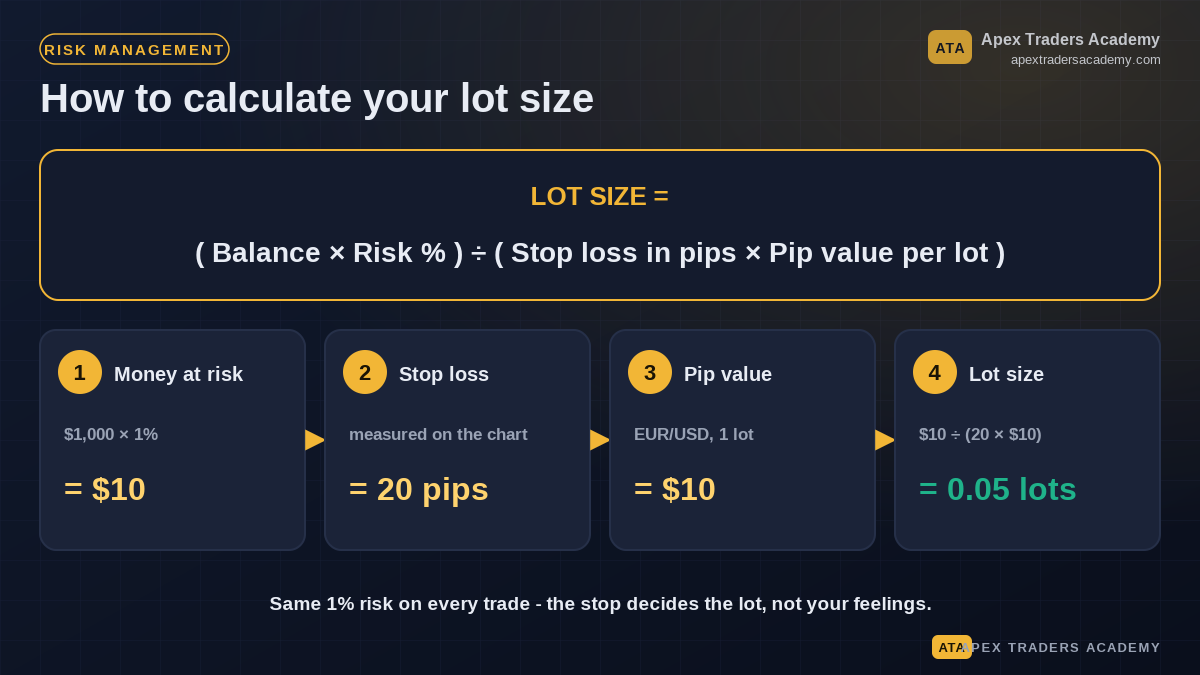
If the correct stop for the idea is relatively wide, the position must be smaller to keep the planned loss near ₦2,000. If the required size is not available or the instrument’s minimum size makes the risk too large, skip the trade. Never force a setup to fit an unsuitable position size. Read the one percent risk rule alongside how to calculate lot size.
Calculate risk before entering
Write down your entry, stop, account currency, instrument, contract size and any costs you can reasonably estimate. Then use your platform’s verified contract details or a reliable position-size calculator to estimate the loss at the stop. Do not assume a pip has the same cash value across all pairs, account currencies or contract types.
For an illustrative example, imagine a planned EURUSD entry at 1.0850 and a stop at 1.0810. The distance is 40 pips using the conventional pip definition for most EURUSD quotes. If a trader’s chosen maximum loss is ₦2,000, position sizing must account for the value of those 40 pips in that account’s currency and the broker’s contract specifications. Without those details, there is no responsible exact lot-size answer.
The basic relationship is: larger stop distance means smaller position for the same cash risk; smaller stop distance can allow a larger position, but only if the stop still makes sense technically. A tiny stop placed inside normal market movement may be hit repeatedly and is not automatically safer.
Place a stop where the idea is invalidated
First define the setup using your chosen method. A top-down trader might identify a Weekly context, a Daily A/V key level and a 4H reaction. If a long idea depends on price holding above a particular swing low, a close below that area may invalidate the reasoning. The actual stop placement must reflect instrument behaviour, spread and execution risk; no single distance works everywhere.
For example, price might reject a level and form an engulfing candle. That can support a hypothesis, but the candle alone does not tell you the right stop. Ask what price action would show the rejection failed. If you enter only because the candle looks impressive, you may have no coherent exit plan. Review support and resistance key levels and the 8-step entry model.
Do not widen a stop after entry simply because you dislike a possible loss. That changes the maximum risk after the decision. If your plan allows adjusting a stop, define the rule before the trade and record it. A stop-loss also cannot guarantee the exact exit price in every market condition.
Manage total exposure, not just one trade
Several positions can be exposed to the same underlying move. For instance, holding multiple dollar-related pairs in the same direction may create more combined USD exposure than the separate trade labels suggest. Before entering, look at open positions and ask how they might behave together.
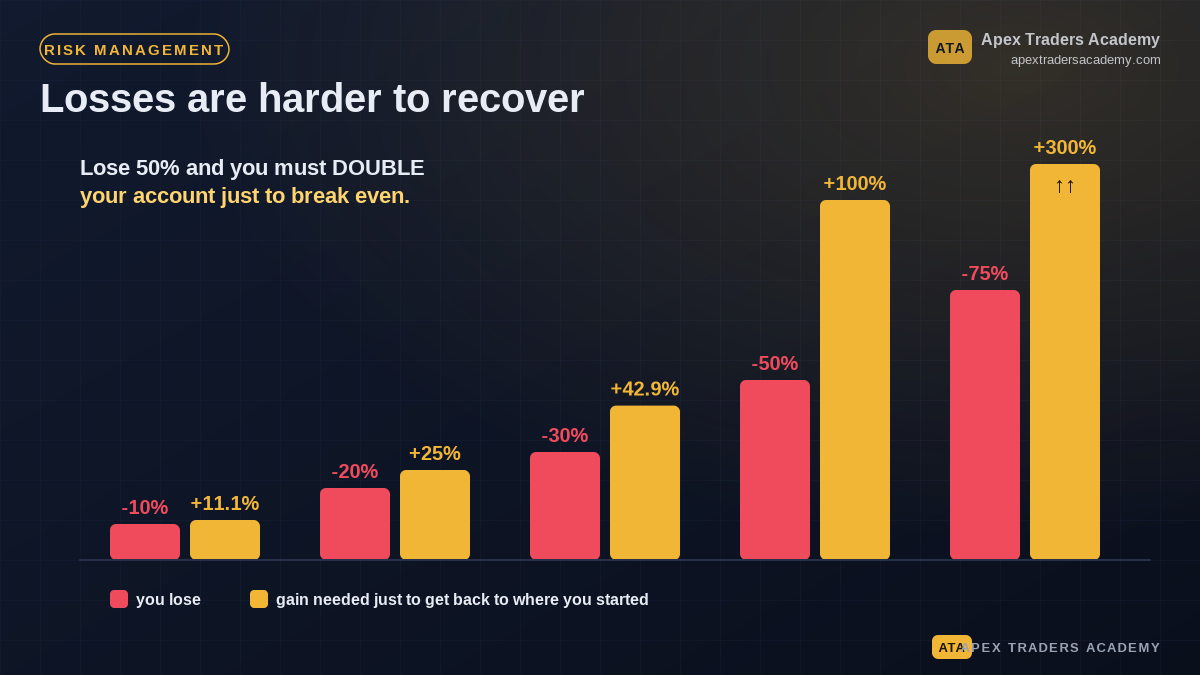
Set a daily or weekly loss boundary that makes you stop and review. The number is a personal process limit, not a market fact. A limit can prevent a losing session from turning into a sequence of impulsive trades. Do not deposit or borrow money to recover a loss, and do not increase size to “make it back.”
Leverage allows a small deposit to control a larger position, which magnifies gains and losses relative to the deposit. The maximum leverage offered by a platform is not a sensible position-size target. Understand margin requirements and the possibility of liquidation before using a leveraged product.
Reward targets and realistic planning
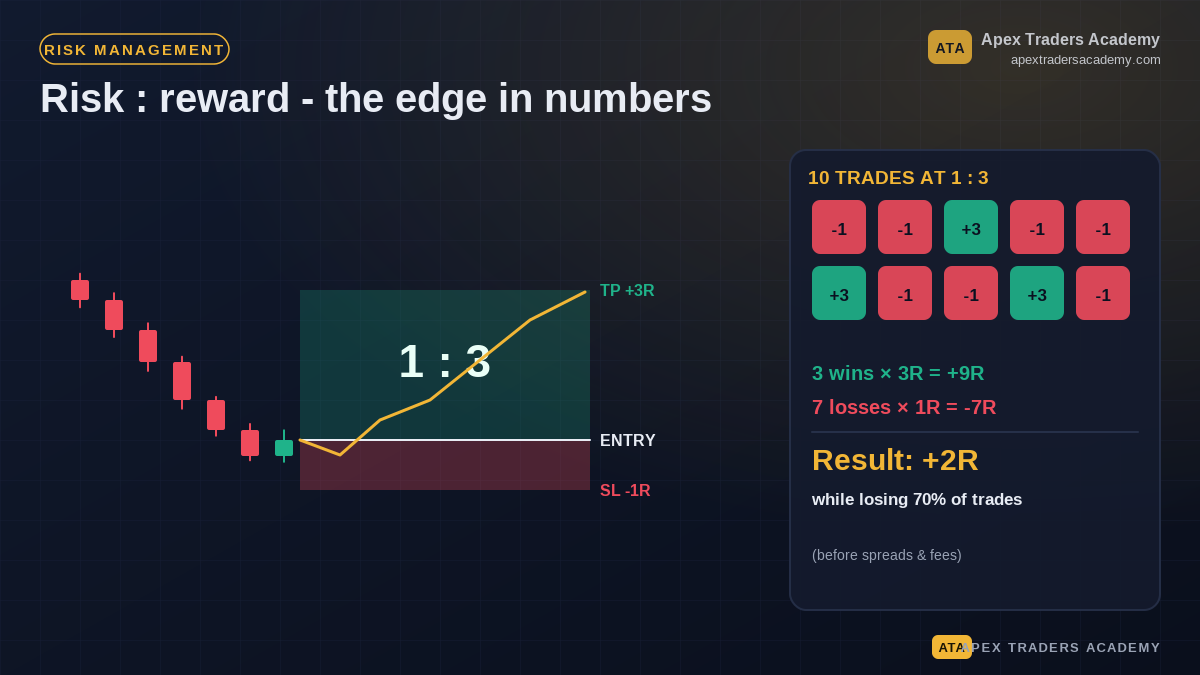
Risk-reward ratio compares a planned loss with a possible planned gain. If a trade risks ₦2,000 and its target would yield ₦4,000 before costs, the planned ratio is 1:2. That arithmetic does not mean the target will be reached, nor does a high ratio automatically make the strategy profitable. Win rate, costs, execution and consistency all matter. See risk-reward ratio explained.
Do not move a target farther away simply to advertise a better ratio. Identify the target from chart structure or a defined exit rule, then check whether the trade is worth taking. If not, pass. The ability to sit out is part of risk management.
Build a pre-trade risk routine
Use a short written checklist before each entry:
- What is the chart context on Weekly, Daily and 4H?
- Which level or condition supports the idea?
- What candle close or price action invalidates it?
- What is the maximum cash loss, including likely costs?
- Does the calculated size fit that limit and the account’s contract rules?
- Do open positions or an upcoming event change total exposure?
- Am I calm enough to follow the plan?
If one answer is missing, delay or skip the trade. This is a practical rule, not a prediction. You can practise with simulated examples on Apex Charts and record the reason for each decision in the trading journal.
Review and improve without chasing losses
After closing a trade, record the planned risk, actual outcome, whether the stop and target rules were followed, and any execution difference. Separate a process mistake from an ordinary losing trade. A trade can lose while following a sound process; a winning trade can still break your rules.
Review a batch of examples before changing a method. One loss does not prove the setup is broken, and one win does not prove the setup works. Look for recurring behaviours: oversized trades, late entries, moved stops, or trading after a daily limit. How to build a trading plan helps turn observations into written rules.
Frequently asked questions
What is proper risk management in forex?
It is a repeatable process for limiting potential loss, sizing positions appropriately, managing combined exposure and reviewing decisions. It does not promise profits or prevent every loss.
How much should a beginner risk on one forex trade?
There is no universal amount that suits everyone. A 1% limit is often used as a teaching example, but your circumstances, account, product and ability to absorb loss matter. Practise first and never risk money needed for essentials.
Is a stop-loss enough to manage risk?
No. Position size, leverage, execution, costs, correlated positions and emotional discipline matter too. A stop is one part of a broader plan and may not fill at the exact requested price in fast conditions.
Should I move my stop-loss when a trade goes against me?
Only if a predefined rule allows it. Widening a stop to avoid accepting a planned loss increases risk and often turns a controlled trade into an uncontrolled one.
How do I calculate forex lot size?
Start with the cash amount you are willing to lose and the distance to the stop. Convert the stop’s value using the pair, account currency and verified contract specifications. If any input is unclear, do not guess.
Education only - not financial advice. Trading on margin is risky; never risk money you can't afford to lose.
Want to see this on live charts?
Inside the course we apply every lesson to real Weekly, Daily and 4H charts - with mentorship until it clicks.
Education only, not financial advice. Trading on margin carries a high level of risk. Always use a stop loss and risk only what you can afford to lose.
Next lessonEngulfing Candle Pattern: Meaning, Rules and Examples →
An engulfing candle is a two-candle price pattern where the second body overtakes the first; learn its limits, context, and a clear way to practise it.