CPI Effect on Forex: What the Inflation Report Can Change
Understand the CPI effect on forex, what the inflation measure represents, why expectations matter, and how to prepare for volatility without guessing the release.

The CPI effect on forex comes from how inflation data can change expectations about interest rates and economic conditions. A hotter or cooler reading may move a currency, but the direction is not automatic: traders compare the release with expectations, prior information and other market forces.
CPI means Consumer Price Index. It tracks changes over time in the prices of a selected basket of goods and services. The details and methods vary by country. For a forex trader, the report is one piece of economic information, not a direct buy or sell instruction.
What is CPI in forex?
CPI is an inflation measure. Forex prices reflect the relative value of currencies, so data that shifts expectations about one country’s economy or central-bank policy can affect that country’s currency against another. The same release can have different effects depending on what investors had already anticipated and what other information is available.
For example, suppose market participants expected an illustrative annual inflation reading of 3.0%, but the published figure is 3.3%. That surprise may lead some participants to reassess the likely path of interest rates. Yet a currency might rise, fall or barely react because the result could already be reflected in prices, another part of the report may matter more, or risk sentiment may dominate.
This is why “higher CPI means stronger currency” is too simple. It leaves out expectations, policy credibility, growth, employment, positioning and the other currency in the pair. A currency pair always compares two sides.
Why inflation reports can move currency pairs
Central banks consider inflation alongside other economic conditions when setting policy. If data changes expectations about future policy, interest-rate differentials may be repriced. Currency markets can respond before a central bank makes any decision, because prices reflect expectations as well as current conditions.
The reaction can be uneven. A headline number might differ from expectations while underlying categories tell another story. The market may initially move one way and then reverse as participants read details or adjust positions. A first reaction is not proof that the move will continue.
The release is also part of a larger calendar. Employment figures, growth data, policy statements and geopolitical developments can alter the context. Do not infer an entire economic outlook from one number, and do not invent what officials will do next.
Prepare for CPI without trying to predict it
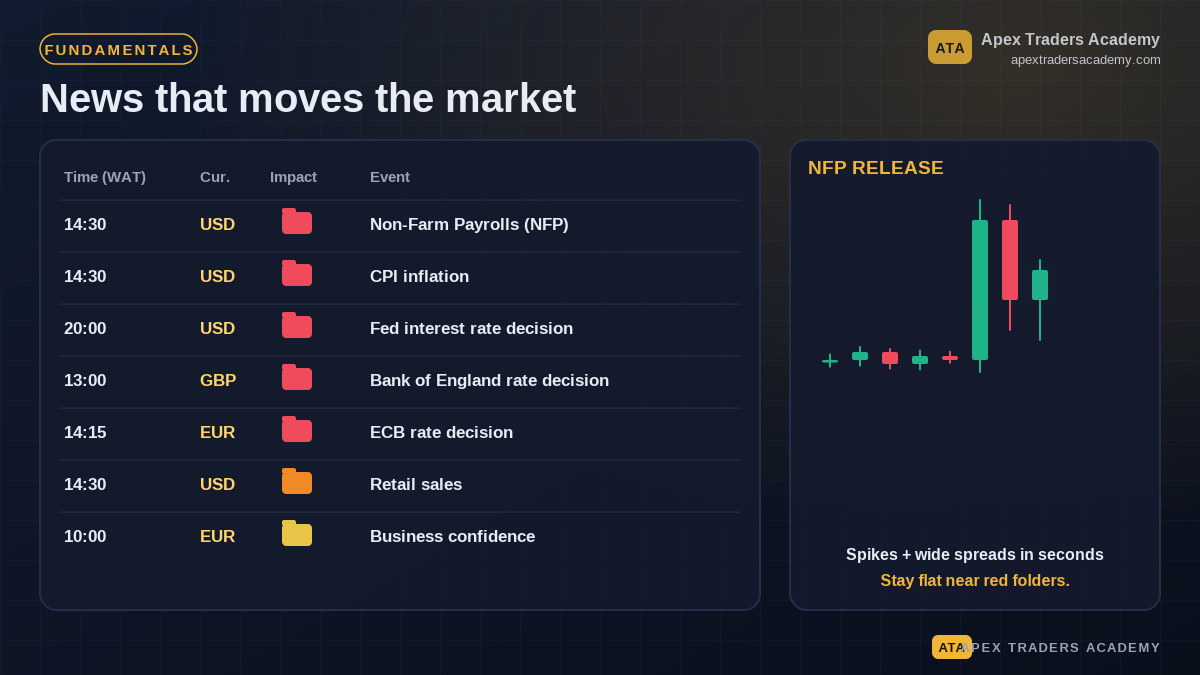
Before a scheduled release, identify whether your instrument is exposed to the relevant currency and decide whether you want to hold a position through the event. If you are new, observing without trading can be a sound choice. Fast markets may have wider spreads, slippage or sharp price changes; a stop order does not guarantee the requested exit price.
Use your Weekly -> Daily -> 4H routine to map context before the report. Mark A/V key levels and note where your idea would be invalidated. Do not widen a stop just to keep a trade alive, and do not increase position size because you expect a large move. Fundamental analysis for beginners explains how to combine economic context with a plan.
For an illustrative scenario, imagine EURUSD is trading near a Daily resistance area before a US CPI release. You could note the level, the possible event risk and a rule to wait for a 4H close before reassessing. This is a process example only; it does not predict EURUSD’s direction or price.
A simple event plan
Write down the release time in your local time zone using a reliable calendar, because daylight-saving changes can shift the difference between Nigeria and the release location. Record the currency affected, your current exposure, and what you will do if the spread or price becomes abnormal. Decide in advance whether you will stand aside.
After the release, wait for the initial movement to settle if that is part of your plan. Check the actual result against the consensus available before publication, not a number you remember after the fact. Then observe whether price closes beyond a meaningful level or rejects it. A wick beyond the level followed by a close back inside may be a liquidity candle or rejection candidate, but it is not a guaranteed reversal.
Use price action to frame the reaction
Fundamental information can explain why attention is on a market; price action helps define what the market is doing. A candle that engulfs the previous body at a Weekly or Daily level may add evidence. It should not override your risk rules or become a signal by itself. How to read candlestick charts and engulfing candle patterns cover the price-action language.
In the top-down method, start with the broader Weekly context, refine levels on Daily, then use 4H closes to evaluate a potential setup. If the chart is unclear, remain out. There is no requirement to trade each release. A good event plan often consists of observing and documenting rather than entering.
Common CPI trading mistakes
One mistake is treating a higher reading as a guaranteed currency direction. Another is trading the headline number without knowing what was expected. A third is entering just before publication because a chart has approached a level. The report can cause a move through that level, a rejection, or no meaningful response.
Avoid using hindsight to claim the move was obvious. Record the information available before the event and the decision you made. Also avoid assuming that a calendar time is the same year-round; confirm the current release time in your platform or a trusted calendar without embedding outside links in the lesson.
Do not confuse volatility with opportunity. Larger candles can mean that risk is harder to control. If the stop distance expands, the position size must shrink to maintain a fixed planned cash risk. Review risk management in forex and risk-reward ratio explained.
Practise with a CPI review routine
You can study past chart behaviour without placing a trade. Hide the candles after a historical release, mark the prior Weekly and Daily levels, and write down your plan. Then reveal the next candles and record whether price accepted or rejected the area. This tests process and observation, not a promise that the same setup will repeat.
Use Apex Charts to mark levels and replay or inspect available chart history. Keep an event journal: what was expected, what the reported figure was, what price did at your level, whether you traded, and whether you respected your risk limit. Trading journal habit can help make this review consistent.
Frequently asked questions
What is CPI in forex?
CPI is a measure of changes in consumer prices. Forex traders watch it because inflation information can affect expectations about economic conditions and future policy, which may influence currency demand.
Does high CPI make a currency stronger?
Not necessarily. The market’s reaction depends on expectations, other report details, policy context, positioning and conditions in the other currency in the pair.
Why can a currency fall after a higher-than-expected CPI reading?
The result may already have been priced in, other details may have disappointed, expectations may have shifted earlier, or broader market forces may have outweighed the headline. A price move cannot be explained by one number alone.
Should beginners trade during CPI news?
There is no need to trade the release. Beginners can observe, practise with historical examples and learn how spreads, candle closes and levels behave. If you do trade, use a written risk plan and understand execution risk.
What is the safest way to use CPI in a forex plan?
Treat it as scheduled event risk. Know your exposure, define whether you will hold or stand aside, keep position risk controlled and wait for price behaviour that meets your rules.
Education only - not financial advice. Trading on margin is risky; never risk money you can't afford to lose.
Want to see this on live charts?
Inside the course we apply every lesson to real Weekly, Daily and 4H charts - with mentorship until it clicks.
Education only, not financial advice. Trading on margin carries a high level of risk. Always use a stop loss and risk only what you can afford to lose.
Next lessonBest Forex Trading Strategy for Beginners: Rules That Fit You →
The best forex trading strategy is not one universal setup; choose defined rules, controlled risk and a journal, then practise a simple top-down method consistently.