Risk : Reward - Why 1:3 Beats a High Win Rate
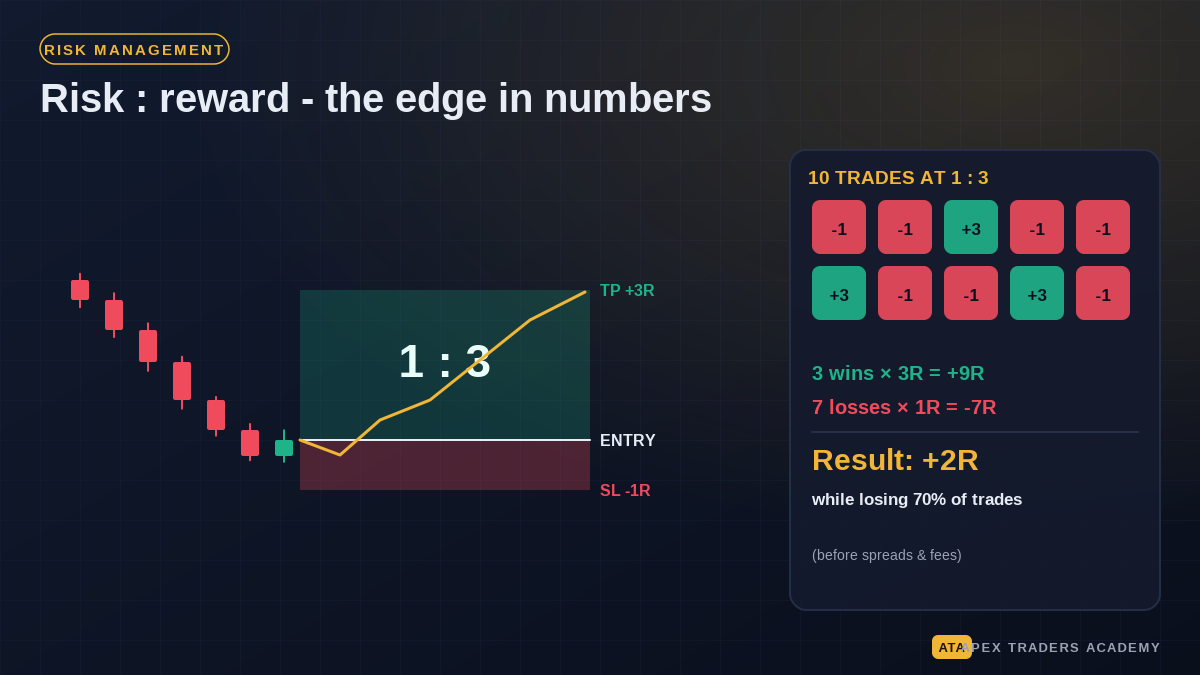
You can lose 7 out of 10 trades and still make money. Here's the maths that changes how you think about trading.
Most beginners chase a high win rate. They want to be right. Professionals want to be profitable - and those are not the same thing.
What is risk:reward?
Risk:reward (R:R) compares what you can lose with what you can make on a trade.
- Stop loss 20 pips, take profit 60 pips → 1:3
- Stop loss 30 pips, take profit 30 pips → 1:1
Traders often call the amount risked 1R. A 1:3 trade risks 1R to make 3R.
The maths that changes everything
Take 10 trades, risking 1% each:
| Win rate | R:R | Result |
|---|---|---|
| 70% | 1:0.5 | 7 × 0.5 − 3 × 1 = +0.5R |
| 50% | 1:1 | 5 × 1 − 5 × 1 = 0R |
| 40% | 1:2 | 4 × 2 − 6 × 1 = +2R |
| 30% | 1:3 | 3 × 3 − 7 × 1 = +2R |
| 30% | 1:5 | 3 × 5 − 7 × 1 = +8R |
(Simple maths before spreads and fees - but the lesson holds.)
A trader who wins only 30% of the time at 1:3 does better than one who wins 70% at 1:0.5. Try it yourself with the win-rate calculator on our home page.
Where good R:R comes from
You can't just move your take profit further away and hope. Good R:R comes from good entries:
- Entering at the zone, not in the middle of the move
- Buying at a discount / selling at a premium
- Using the lower timeframe for a tighter, logical stop
- Targeting the next key level or liquidity pool
That's why the 8-step entry model matters: it puts you in at the right place, so 1:3 and more becomes natural.
Mistakes that destroy R:R
- Moving the stop loss further away when price comes close
- Closing winners early out of fear, but letting losers run
- Setting targets beyond obvious levels where price is likely to reverse
Cut losses short. Let winners reach their target. It sounds simple - it's the hardest discipline in trading.
Next lesson: Fundamental analysis for beginners
Want to see this on live charts?
Inside the course we apply every lesson to real Weekly, Daily and 4H charts - with mentorship until it clicks.
Education only, not financial advice. Trading on margin carries a high level of risk. Always use a stop loss and risk only what you can afford to lose.
Next lessonFundamental Analysis for Beginners: NFP, CPI, Interest Rates & the Calendar →
Why news moves the market, which events matter most, and how to use the economic calendar so a headline never blows your account.