Forex Trading in Port Harcourt: Oil, the Dollar and Online Learning (2026 Guide)
Forex trading in Port Harcourt calls for understanding oil and dollar news, checking the economic calendar and managing the added risks of oil CFDs.

Forex trading in Port Harcourt can raise questions about oil, the naira and the US dollar, especially for learners who see energy as part of the wider economy around them. A useful first step is separating a country's economic story from a trade signal. Headlines can explain why markets are moving, but they do not tell you exactly when to buy or sell. This guide shows how to read the calendar, study oil-related markets carefully and learn online without assuming that local interest creates a trading advantage.
Forex trading in Port Harcourt: why oil and the dollar matter
Crude oil is priced internationally, commonly in US dollars. Changes in oil supply expectations or demand outlook can affect the price of oil contracts and can influence how traders think about currencies tied to energy-exporting economies. The naira can also be discussed in relation to foreign currency flows and the country's broader economy. Those connections are complex: a rise in crude does not mechanically mean the naira strengthens or that a particular forex pair must move in one direction.
The US dollar matters because it is one side of many widely traded pairs and the pricing currency for major commodities. US economic releases can move dollar pairs and oil markets at the same time, but the reaction depends on expectations, positioning and the details of each release. Treat each connection as context to investigate, not a shortcut to a prediction.
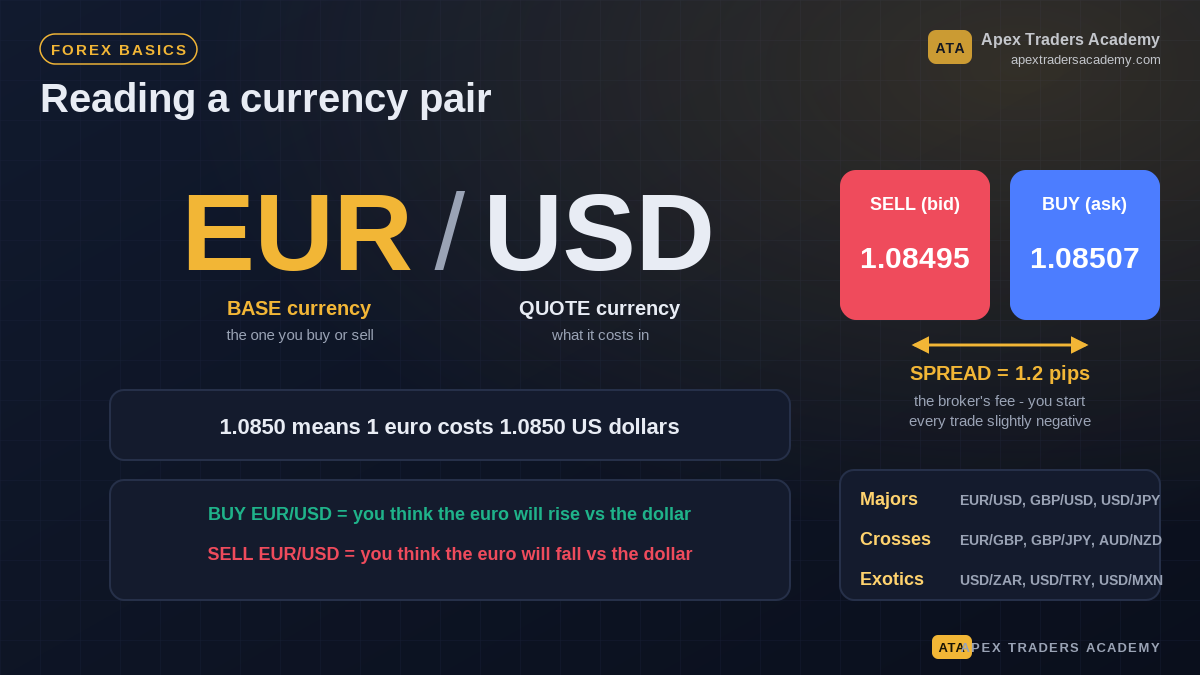
For a basic understanding of pairs, begin with how to read a currency pair. Then use fundamental analysis for beginners to learn how scheduled information fits alongside chart evidence.
How to read an economic calendar
An economic calendar lists planned releases and events. Before a session, note which events relate to the instruments on your watchlist, when they are scheduled in your local time, and whether they are likely to bring uncertainty. Central bank decisions, inflation releases, employment data and oil-related announcements can all affect market expectations. OPEC meetings and communications may influence oil supply expectations; they do not guarantee a particular price response.
Use a simple preparation routine:
- Check the date, time and currency or market affected.
- Notice whether the event is a scheduled release or a meeting whose timing can change.
- Decide whether your plan allows trading around the event or requires you to stand aside.
- After the release, wait for price action to settle if your method depends on candle closes.
- Record what the market did instead of assuming the headline explains every move.
The actual release, prior expectations and revised figures can matter differently. A headline number that appears positive may still disappoint traders if expectations were higher. Avoid making a trade from a social media summary or a single number without understanding what it measures.
Oil CFDs have risks of their own
USOIL and UKOIL are common labels used by platforms for oil instruments, but the exact contract specification depends on the broker. A CFD is a derivative that tracks price without giving you ownership of barrels of crude. Contract size, margin, financing, trading hours and price adjustments vary, so read the instrument details before placing an order.
Oil can move sharply around supply news, geopolitical developments and changes in demand expectations. Leverage magnifies the effect of those moves on account equity. A stop order can also fill at a different price during a fast market or a gap, depending on conditions and broker execution. Never assume that a small chart move means a small cash risk; calculate position size from the contract's value and stop distance.
Before practising oil, answer these questions: What does one lot mean on this platform? What is the minimum size? How is margin calculated? Are there overnight financing charges? When is the market closed? What happens if price jumps through a stop? If the broker's answers are unclear, do not fund an account until you understand the exposure.
A calendar-first example
Imagine a learner has marked an area on UKOIL's Daily chart. The calendar shows an upcoming oil-related event and a US data release later in the week. The learner does not enter just because the events sound supportive of higher prices. Instead, they note the risk, wait for the event to pass, and then check whether a Daily close confirms a move through the level. If the method requires 4H confirmation, they wait for that too. If volatility makes the stop too wide for their risk limit, they skip the trade.
This example is a process illustration, not a current forecast. Events can surprise in either direction, and the chart can reject an apparently convincing story.
Learn online from Port Harcourt
Apex Traders Academy's trading floor is at Lady Giselle Street, River Park, Lugbe, Abuja. Learners in Port Harcourt receive the complete course online: live video sessions, recorded lessons and community support, with Apex Charts, the free trading journal and Telegram alerts. A learner who wants in-person teaching can visit Abuja. Apex does not operate a Port Harcourt office, branch or local classroom. Compare this with learning forex in Abuja and the Nigeria learning guide.
The course is $200 for three months or $300 for lifetime access. You can compare the details at /courses. A good learning plan should explain risk, chart reading and practice, not only provide market calls. Free lessons can help you decide whether the teaching approach suits you.
Read what forex is, forex trading sessions in Nigeria time, and the one-percent risk rule. The multi-timeframe analysis guide explains how to organise a chart from broad context to a more specific decision.
Frequently asked questions
Does rising crude oil make the naira stronger?
There is no guaranteed one-to-one relationship. Oil prices are one factor among many that can affect economic expectations and currency demand. A trader should avoid treating a headline correlation as a reliable entry signal.
What are USOIL and UKOIL?
They are labels many trading platforms use for oil price instruments, often CFDs. Each broker sets contract details, so confirm the specification, costs and trading hours on the platform you use.
Can OPEC news move oil prices?
Announcements can change expectations about supply and may affect prices. The reaction is uncertain and depends on what traders expected beforehand and other information arriving at the same time.
Is oil trading suitable for a beginner?
Oil can be volatile and leveraged CFDs can magnify losses. A beginner should first learn the contract terms and practise risk calculations on demo. There is no need to trade oil simply because it is familiar.
Can I study with Apex from Port Harcourt?
Yes. The full course is delivered online with live video sessions, recordings, community and tools. The physical trading floor is in Abuja; you may visit there for in-person sessions if you choose.
Study the process before the instrument
Build a calendar habit and practise reading a market without rushing to trade every event. You can explore and review charts using Apex Charts, then see the online learning options at /courses. Keep the decision process and the amount at risk clear before considering any leveraged product.
Education only - not financial advice. Trading on margin is risky; never risk money you can't afford to lose.
Want to see this on live charts?
Inside the course we apply every lesson to real Weekly, Daily and 4H charts - with mentorship until it clicks.
Education only, not financial advice. Trading on margin carries a high level of risk. Always use a stop loss and risk only what you can afford to lose.
Next lessonForex Trading in Enugu: A Careful Start for Students and Young Professionals (2026 Guide) →
Forex trading in Enugu starts with demo practice, small and controlled risk, a written track record and caution around account manager promises.