Forex Trading in Kaduna: A Beginner's Three-Month Learning Path (2026 Guide)
Forex trading in Kaduna is easier to approach with a month-by-month learning plan, practical study choices and preparation for internet or power interruptions.

Forex trading in Kaduna can feel like a large subject when every video introduces a different strategy. A beginner does not need to master everything at once. A better start is to divide learning into stages: understand the language, practise one method, and review your decisions before considering any live risk. Your learning format matters too. Self-study, an online course and mentorship each offer different levels of structure and feedback.
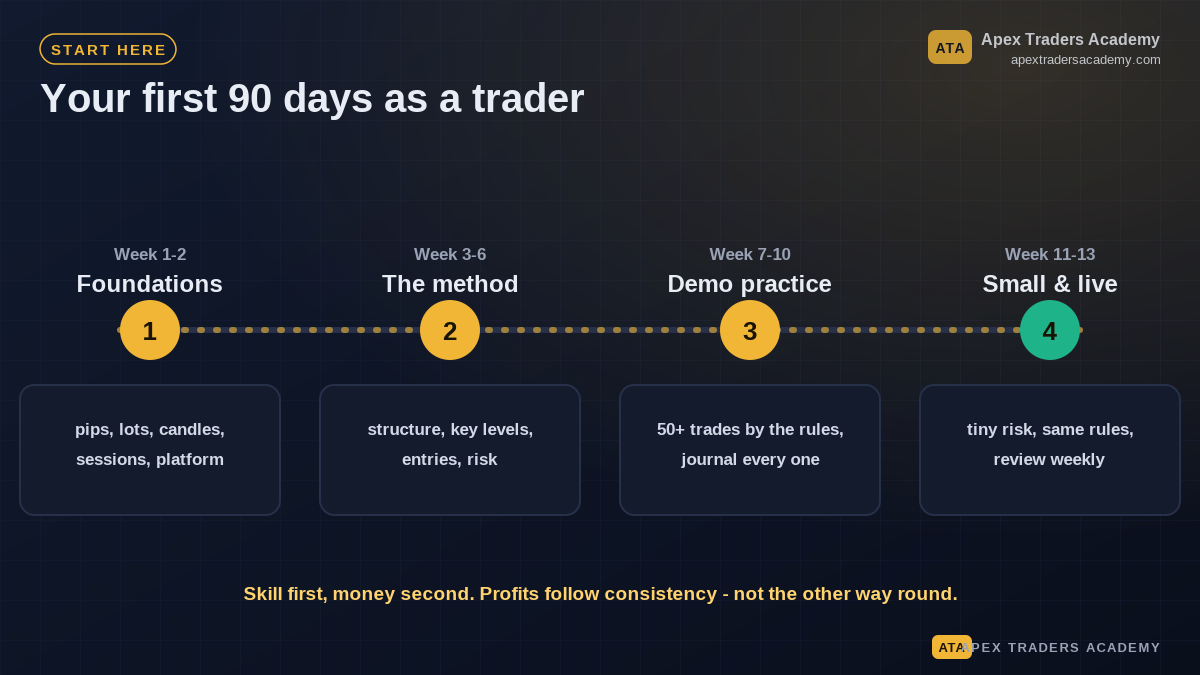
Forex trading in Kaduna: month one, learn the foundations
In the first month, aim to understand what is being traded and how orders work. Learn currency pairs, pips, lots, spreads, leverage, market sessions and the difference between a market order and a pending order. Practise on a demo account so that platform controls become familiar without risking money.
Keep the instrument list short. You might use USDJPY as a study chart, but do not assume one pair is simple or predictable. Learn how a candle forms, what a candle close tells you and how price can move through a level before returning. Avoid paying for indicators until you can explain the basic chart in your own words.
At the end of month one, you should be able to describe the size of a practice position, where its stop would sit and what the maximum planned loss is. If those parts are still confusing, spend more time on them. A calendar date does not mean you must move to live trading.
Useful starting lessons are what forex is, how to read a currency pair, pips, lots and leverage explained, and forex trading sessions in Nigeria time.
Month two, practise one chart method
During the second month, learn to organise information instead of searching for a perfect signal. Mark a few broad Weekly areas, check the Daily structure, and use 4H only if your method calls for more precise conditions. A top-down view helps prevent a small candle from dominating your whole decision.
Write the setup rules down. For example, state what counts as a key level, what evidence would confirm a reaction, what candle close you need, and what price would invalidate the idea. These details should come from the method you are learning. Do not change the rules every time a trade loses; gather examples first, then review whether the rule was followed and whether it makes sense.
Practise replaying old price action or use demo forward practice. Before each practice entry, note the reason, stop, target logic and risk. Afterward, capture a chart image and write what you learned. This turns a screen session into a lesson rather than a sequence of guesses.
Read support and resistance key levels, market structure, and multi-timeframe analysis. Keep the one-percent risk rule nearby as a guide to planning losses, not as a guarantee that a trade is safe.
Month three, review before increasing exposure
In month three, focus on execution and record keeping. Review the journal for repeated errors: entering early, moving a stop, trading during a planned break, or increasing size after a loss. A profitable result cannot excuse a rule violation, and a losing result does not necessarily mean the process was poor.
Do not set a deadline to fund a live account. If you eventually choose to do so, use only money that can be lost without affecting rent, food, transport, school fees or family obligations. Begin at a size where the full planned loss is manageable. If you cannot calculate the potential loss, do not place the trade.
Three ways to learn
Self-study gives flexibility and costs little, but requires you to organise the sequence and assess your own mistakes. It works best when you choose a reliable curriculum and keep a study log rather than jumping between unrelated clips.
An online course offers a planned order of lessons and may include live explanations, recordings and a community. Ask what is covered, how long access lasts, and whether risk management and feedback are included. An online format can suit a learner who needs to fit sessions around other commitments.
Mentorship can provide feedback on your own practice, but the word is used broadly. Confirm what support actually includes and avoid anyone promising a salary, managing your money or demanding account passwords. A responsible teacher helps you make decisions independently.
Plan for internet and power interruptions
Trading does not require expensive equipment, but reliable access matters when you need to check an open position. Use a phone chart app to review levels and receive price alerts, while remembering that a small screen can make detailed chart work harder. Do deeper analysis when you have a stable connection and enough time to focus.
Alerts can notify you when price approaches a level, but they do not manage a trade or guarantee delivery. If power or connectivity is unreliable, do not open positions that require constant manual attention. Set protective orders according to your plan, understand what they can and cannot guarantee during fast conditions, and keep your broker's official support details accessible. Never share login credentials with someone offering to watch your account.
Study online from Kaduna
Apex Traders Academy's in-person trading floor is at Lady Giselle Street, River Park, Lugbe, Abuja. Learners in Kaduna can access the complete course online, including live video sessions, recorded lessons, a community, Apex Charts, a free trading journal and Telegram alerts. If in-person teaching matters to you, you can visit Abuja; Apex has no Kaduna office, branch or local class. Read our Abuja guide and Nigeria learning guide for the broader picture.
The course is $200 for three months or $300 for lifetime access. See the course page for what is included. Other relevant reading includes the first 90 days trading roadmap, how to build a trading plan, and trading journal habit.
Frequently asked questions
Can I learn forex trading on a phone?
You can study and review charts on a phone, especially for alerts and basic checks. Detailed analysis is often easier on a larger display, and you should not rely on a phone alert as a substitute for a trade plan.
Should I learn alone or join an online course?
Self-study offers flexibility, while a course can provide sequence and support. Choose based on how you learn and check the curriculum, feedback and costs before paying.
How long should I practise on demo?
There is no universal number of weeks. Continue until you understand your method, can calculate risk and have enough recorded practice to identify your habits. Demo performance still cannot guarantee live results.
What if my internet goes off while a trade is open?
Plan for interruptions before entering. Know how your broker handles stop orders and keep account access secure. If you cannot manage the possible exposure during likely interruptions, avoid opening that trade.
Is USDJPY a good first pair?
It can be a chart for study, but no pair is guaranteed to be beginner-friendly. Learn its spread, volatility and contract terms, and practise without real money first.
Follow a path, not a rush
Use the first months to build understanding, practical records and risk habits. Review USDJPY or another instrument in Apex Charts, then consider the structured online programme through /courses if it fits your learning needs.
Education only - not financial advice. Trading on margin is risky; never risk money you can't afford to lose.
Want to see this on live charts?
Inside the course we apply every lesson to real Weekly, Daily and 4H charts - with mentorship until it clicks.
Education only, not financial advice. Trading on margin carries a high level of risk. Always use a stop loss and risk only what you can afford to lose.
Next lessonForex Trading in Ibadan: Learn Chart Reading from Weekly to 4H (2026 Guide) →
Forex trading in Ibadan begins with reading chart context, key levels and candle closes, then practising a Weekly-to-Daily-to-4H plan in replay.